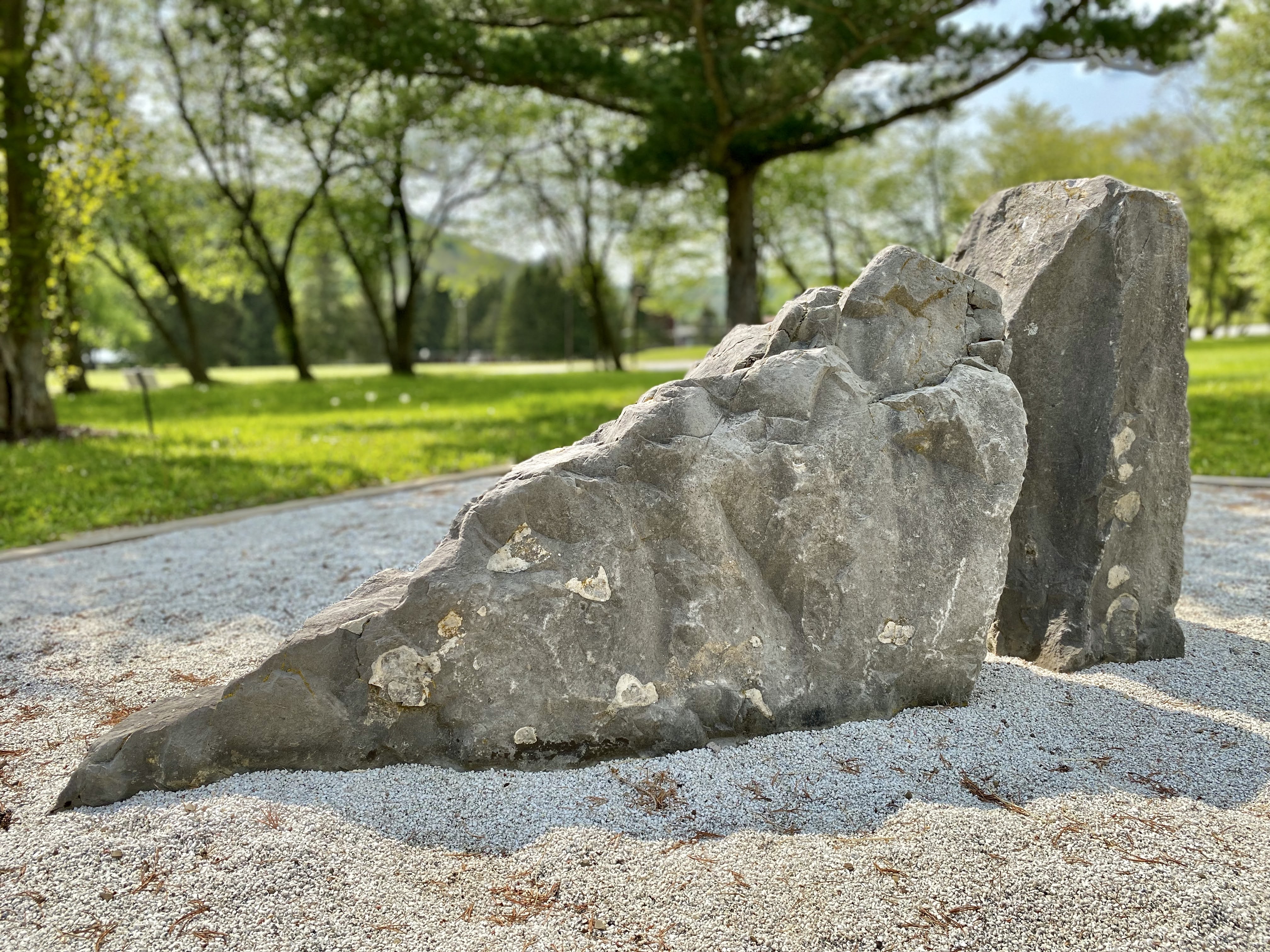
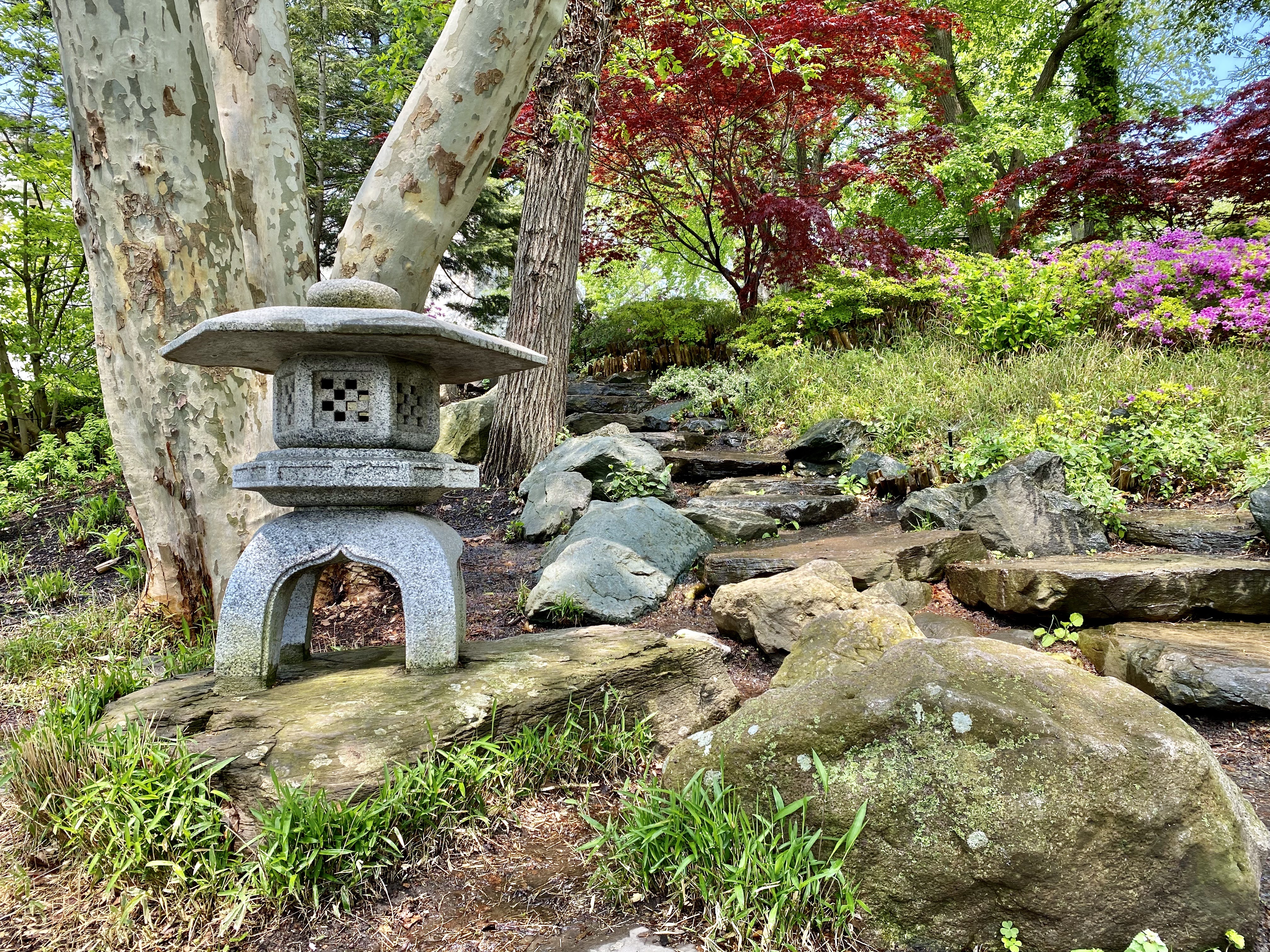
Gan Ryuu Tei, the Japanese garden located at the Cleveland Botanical Garden, was designed by David Slawson, who was trained under Japanese garden master Kinsaku Nakkene. The garden is comprised of the Karesansui (dry landscape) and Tea garden styles of Japanese gardens.
Tuesday, May 23, 2023
Gan Ryuu Tei – Cleveland Botanical Garden
Monday, May 22, 2023
Nannen Arboretum
The Nannen Arboretum in Ellicottville, NY claims to be inspired by Chinese or Japanese elements. The garden has its origins in 1958, when William O. Nannen, a local businessman, conservationist and political leader, donated land to build the new Cornell Cooperative Extension. By 2013, the site had been transferred to the Town of Ellicottville and the Nannen Arboretum Society was established.
There are two distinct Japanese elements, a “replica’ of the Ryoanji Temple stone garden in Kyoto Japan, and the Amano Hashidate Bridge (Bridge in Heaven) at the far end of Nipponica Pond built in 1981.
The stone garden is a good attempt, but needs some more plantings around it to help enclose it.
The bridge does not really reflect Japanese bridge construction. The intent was nice, but the bridge today needs serious reconsideration. Nevertheless, the view of the pond and surrounding scenery is impressive.
Delaware Park Japanese Garden - Buffalo
The Delaware Park Japanese Garden in Buffalo is part of a special sister-city initiative between Kanazawa, Japan and Buffalo, NY. The garden was originally completed in 1974 and was located on 6 acres along Delaware Park’s Mirror Lake. In the early 1980s the garden was renovated and included a new wider path through the park. Then, in 1994, efforts were begun to once again renovate the garden, including the addition of the stone steps and the "Shinto" gate. There were also efforts to restore and improve the maintenance of the garden in 2008. Although this may sound troublesome, many gardens of this age are subjected to periods of use, neglect, restoration, and continued use. The process is familiar to similar situations I have seen at other gardens.
Sunday, May 29, 2022
Naumkeag
Naumkeag is the former summer retreat of Joseph Hodges Choate (1832-1917). The house was built 1885-1886 and a classic example of a Gilded Age estate.
Website: https://thetrustees.org/content/naumkeag-history/
The existing gardens were designed and constructed by Fletcher Steele in conjunction with Mabel Choate who inherited the property in 1929. Mabel had traveled extensively and as a result, she made changes to the pr-existing formal gardens. One of those changes consisted of a Chinese garden. The garden took 20 years to complete, being finished in 1955, three years before Mabel's death.
The garden is a very good example of turn-of-the-century "Oriental Exotic," when westerners interpreted Chinese and Japanese gardens in inauthentic ways. This garden is unlike any other I have seen in North America. It has elements of traditional Chinese gardens, and even resembles aspects of the Forbidden City, but it also has odd mixtures of Chinese, Japanese, and even South Asian elements, all of which reflect Mabel Choate's travels and interests.
By 2016, the "Temple" garden was restored and is open to the general public as part of tours of the estate property.